


























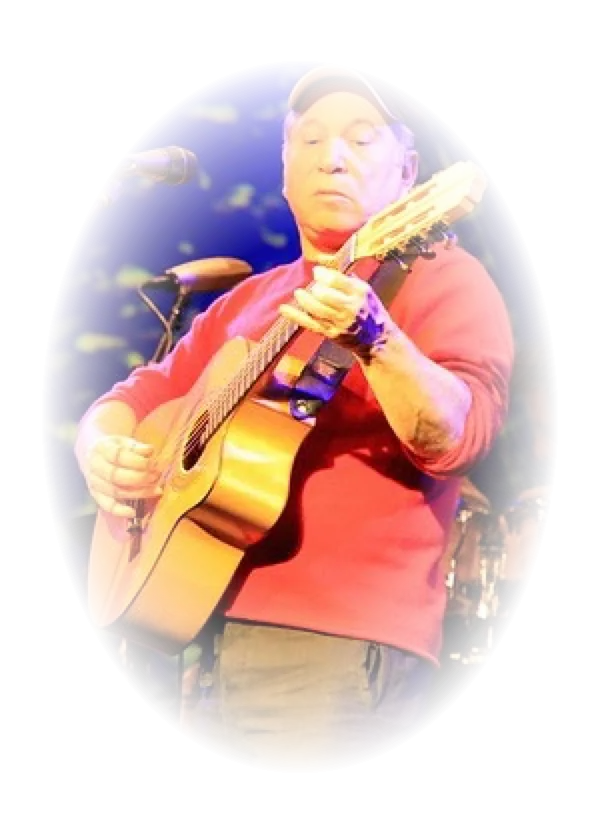

I've been playing piano and guitar most of my life, and for years my problem was never the playing. It was that I'd get a good verse, feel great about it, and then sit there with no idea what was supposed to happen next. I had a folder full of half-written songs and a head full of the other halves.
What I was missing was a map. Songs come in a small number of shapes, each part of them has an actual job, and once you know what verse two is for, verse two stops being a wall.
The shapes, the parts of a song and what each one does, five ways to start, how to write the words once you know where they go, and a fill-in template at the end so you can stop reading and go write something.
SongFriend now has a song writing template you can actually write in--from the first line, or by pasting in what you've already written. Get a hand when you're stuck, hear the chords as you go, and hear the whole song played when it's done.
There are fewer than you'd think, and you already know all of them by ear.
Verses keep the same melody and change the words. The chorus keeps both--same words, same tune, every time. That's nearly everything on the radio, and it's been nearly everything on the radio for sixty years.
You'll see people online claim a specific percentage of hit songs use this form. I've gone looking for where that number comes from and I can't find it. Somebody made it up once and everyone's been passing it around since, like a chain letter with a footnote. It's most of them. That's as precise as I'm willing to be.
Verse, chorus, verse, chorus, bridge, chorus, done. This is the full-length version of the one above, and it's the default shape of a modern song. The bridge is the part that stops it feeling like you played the same two minutes twice.
Two eight-bar sections, a contrasting eight-bar section, then back to the first one. No separate chorus at all--the hook sits at the top or the bottom of the A section and does double duty.
If you grew up singing standards, this is the shape you grew up singing. Somewhere Over the Rainbow. Blue Moon. Fly Me to the Moon. It ran American popular song for the first half of the twentieth century, and then rock and roll came along and verse--chorus ate the world.
Almost every article about song structure lists AABA under "historical forms" and moves on, which I think is a mistake. It's a tighter, more elegant piece of construction than the thing that replaced it, and it's still sitting right there, out of copyright and out of fashion, which is the best combination there is.
The verse does all the work and ends on one repeated line instead of a full chorus. Folk and early country live here. The refrain isn't a hook--it's a closing line that comes back around, and after three verses you're singing it whether you meant to or not.
A form and a chord scheme at the same time, which is a rare and beautiful thing. Twelve bars, three chords, a lyric pattern where you say the line, say it again, and then answer it. You can learn the whole architecture in about four minutes and spend forty years on it.
Choruses arrive earlier than they used to, and songs are shorter than they were in 1990. That's real, and it's because of streaming--a service that pays out after thirty seconds has opinions about your intro.
Here's my take: know that this is happening, and then write the song you actually want. Nobody sitting at a kitchen table with a guitar is going to lose a bidding war because their chorus showed up at the fifty-second mark. Optimizing a song nobody's heard yet for an algorithm is ridiculous, in my opinion. Write the thing. Then worry.
This is the part most write-ups skip, and it's the part that gets you unstuck.
Verse. Moves it forward. New words every time. The verse carries the who, the what, the when and the where--the facts and the scene. If your verses aren't going anywhere, that's usually because nothing happens in them.
Chorus. One idea, unchanged, every single time. It carries the title. It says what the whole song is about, and it says it the same way on purpose--that repetition isn't laziness, it's the point. The chorus is the thing they sing in the car.
Pre-chorus. A ramp. It builds tension and points the ear at the hook, and it's optional. Its entire job is to make the chorus hit harder than it would if it had walked in cold.
Bridge. Happens once, usually after the second chorus. It's a departure--new chords, sometimes a new key, and lyrically a new angle on the same problem. Then it hands you back to the chorus, which now means something a little different than it did the first two times.
That last part is the whole trick, by the way. A good bridge doesn't add information. It changes what the chorus means when it comes back. Same words, new weight.
Intro, outro, instrumental break. The break usually sits where a third verse would have gone, which tells you something about how many verses a song can carry before people start checking their phone.
This is the part that I find most interesting, and I had to write it all down before I built this tool, to make sure it would all work out properly. Decade music, I'm calling it.
SongFriend picks a different structure depending on the era you choose, because the eras genuinely disagree with each other. Fifties and sixties country walks straight from the verse into the refrain--no pre-chorus, and a short instrumental break where a third verse would go. Fifties rock and roll is verse, verse, middle eight, verse, and that's the whole song, in about two minutes. Sixties folk revival gives you many verses and a single repeated closing line rather than a hook.
Then eighties soft rock shows up and there's a real pre-chorus doing the work of building tension, the chorus lifts into the relative major, and the last one steps up a whole tone because of course it does. Nineties country-pop keeps the fiddle and the steel but builds the song like a radio single--clean verse, real pre-chorus, chorus landing on the title every time.
So when someone tells you the correct structure for a song, ask them which decade they mean. This is all because of culture changes, and technology changing and improving. You can sit back and imagine all the music throughout the years and think about it--it's pretty neat--I think.
A couple of rules the tool sticks to, which I'll defend: a pre-chorus repeats before every chorus. If it only shows up once, it wasn't a pre-chorus, it was a weird bit. And a bridge comes once, late, and nothing builds into the chorus after it. You've already had your departure. Get back to the hook.
These aren't ranked. They're just five different options that you can use--whichever feels the smoothest to you when you try them. And you don't have to choose just one, or any at all if you have your own way already.
1. Chords first. Sit down, find a loop you like, and sing nonsense over it until actual words fall out. This is how a lot of self-taught players work. If you want a starting point, I wrote up the fifteen progressions I keep going back to, with audio so you can hear them instead of reading chord names off a screen.
2. Title first. Find a phrase worth a whole song, then build every section around what it means. This is the Nashville method and it's the most disciplined of the five, because the title tells you what belongs in the song and what doesn't. Most of what doesn't belong in your song is something you were personally attached to.
3. Melody first. Hum it with nothing in your hands. Get one idea for a verse and a different one for a chorus, then work out what chords fit underneath. Hard to do, worth doing, because a melody you found without an instrument won't have your usual habits in it.
4. Lyric first. Title, then chorus words, then verses, then the hook, then everything else. I use this one a lot, I find it easier to write the words, not singing them with a melody yet--and then find chords and a melody after that. But there are different strokes for different folks. No 'right' one. Find which one works best for you.
5. Story first. Know what happened, and to whom, before you write a single line.
You asked me for this part, so here it is--and this isn't folklore. There are people who have spent whole careers on how lyrics get written, and their methods have names.
Pat Pattison teaches this at Berklee. Ten minutes every morning, one object, and you write about it through all the senses--not just what it looks like, but what it smells like, what it sounds like, what it weighs, what it does to the room.
The writing itself isn't the point. The point is building the habit of reaching for the specific thing instead of the general one, so that when you're actually in a song, the specific thing is what shows up. This is the single most useful exercise on this page and it costs nothing but ten minutes.
Also Pattison. Prosody is the match between how a song is built and what it's about. An unsettled lyric wants an unsettled shape--uneven lines, a chord that doesn't resolve. A settled one wants even lines that land exactly where you expect them.
When a song feels wrong and you can't say why, this is almost always it. The words are saying one thing and the construction is saying another, and your ear catches it before your brain does.
Andrea Stolpe's idea. Alternate between outside and inside--what's happening in the room, then what's happening in your head. Then back outside again.
It gives a verse motion without requiring more plot, which is enormously useful, because most songs don't have enough plot to fill three verses and shouldn't pretend otherwise.
Sheila Davis wrote about this better than anyone. Who is talking. To whom. When. Where they're standing. Decide it before you write, and don't drift halfway through--a song that starts as I and quietly becomes you by verse two makes people uneasy and they won't know why.
Her other big one: the way from the personal to the universal runs through the specific detail, not the general statement. "I miss you" is universal and lands on nobody. The particular chair nobody sits in anymore lands on everybody.
Perfect rhyme closes a line hard. Near-rhyme leaves it hanging open. That means you get to choose how finished each line feels--and you can hold a line open on purpose, so the listener leans in for the next one.
This is the least-known genuinely useful idea in lyric writing, and it's the reason a song can rhyme all the way through and still not sound like a greeting card.
Three-act structure--setup, confrontation, resolution. Verse one sets it up. Verse two makes it worse. The bridge turns it. The last chorus means something it didn't mean at the start.
The beat sheet--list every turning point before writing a word. One line per section, saying what that section DOES--written before any lyrics exist.
The snowflake method--one sentence, then a paragraph, then a page, then scenes. One sentence for the whole song. Then one line per section. Then the words.
Index cards--write each scene on a card and reorder them. A card per section. You will find out that verse two and verse three are in the wrong order.
Pantsing vs plotting. Chords-first is pantsing. Title-first is plotting. Both of them finish books.
One sentence per section, in plain English, before you write a line of lyric.
If you can't say what verse two is for, that's the reason verse two won't come. It isn't a block and it isn't a dry spell. There's just nothing scheduled to happen there. I wrote a whole post about being stuck in verse two and it arrives at the same diagnosis from the other direction, which is how you know it's probably true.
Fill this in before you write a line. It takes about five minutes and it saves time. I'm only using 2 verses for this--you can always add more.
If you get to the end of that and every line has something in it, the song is essentially already built. What's left is choosing the words, which is the fun part, and which is much easier when you know what they're supposed to be doing.
And if a line of it is blank--that's not a failure, that's the actual answer. That's the part of the song you haven't figured out yet, and now you know which part it is instead of just knowing something's wrong.
If you'd rather see the map filled in than described, there are two posts here that do it for one occasion each: a wedding song and an anniversary song for your parents. And if you're coming back to an instrument after years away, start smaller than any of this suggests. A verse and a chorus is a finished song.
I needed exactly this and couldn't hold it all in my head--and nothing I could find on the internet would help me finish a song, put chords to it so I could hear them, and keep me in the driver's seat. So I built SongFriend. You tell it what the song is about, pick a feel and an era, chords you can decide from, or option out and it will pick for you--and it hands you a structure with the words in it and the chords sitting above them--a verse, a chorus, a pre-chorus or a bridge if the era calls for one.
Then you change it. All of it. Swap the chords, drag one onto a different word, type straight onto the lines, ask for a different take on a verse. It gets you a draft to react to, which for me is the hard part--I can fix a bad verse all day, but I can't fix a blank page.
Your first whole song is free and it never asks for a card. After that it's $11 a month, which keeps the thing online and improving. If you want to try it properly and can't spare it, write to us and we'll set you up.
Quick honest note: SongFriend uses AI under the hood. We're not a tech company--SongFriend was built by a piano and guitar player who wanted this help and figured other players and anyone might too. What it makes is a starting point, not a finished song. You're still the one at the instrument, and you're still the writer. Have fun!